New Coalition: Advancing Chicopee Together/Adelantando Chicopee Juntos (ACT)
March 2, 2026
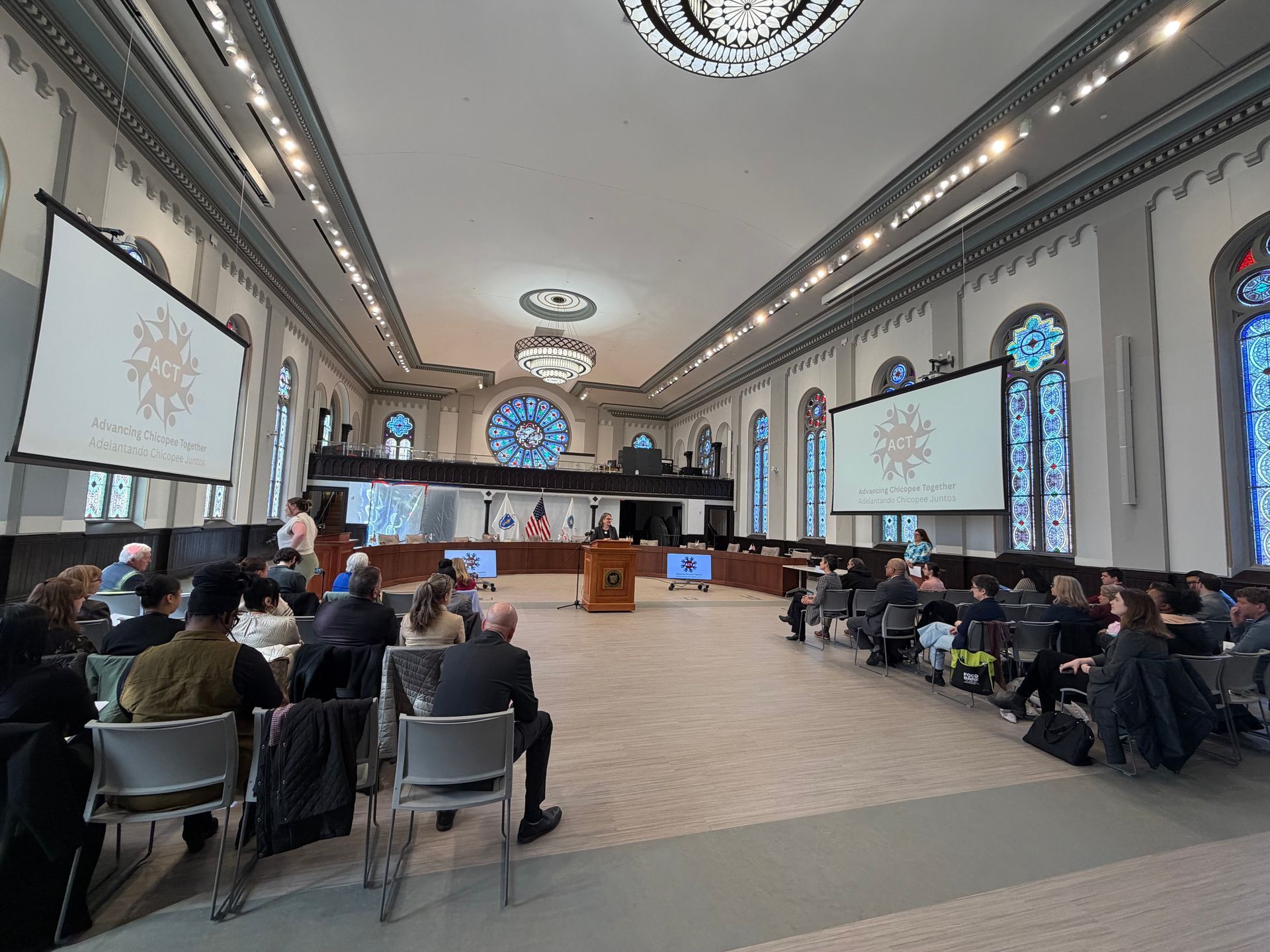
ACT press event, people seated listening to person at podium, ACT logo on large screen

The Public Health Institute of Western Massachusetts (PHIWM) and the City of Chicopee announced Friday, February 27, 2026,  the launch of Advancing Chicopee Together / Adelantando Chicopee Juntos (ACT), a new community coalition bringing together residents, organizations, and local leaders to improve health and advance equity in Chicopee. 


Rooted in extensive community feedback and collaboration, ACT will initially focus on two priority areas: access to nutritious food and maternal/perinatal health. Community health data indicate that Chicopee has higher rates of hypertension and obesity than the state overall, contributing to higher premature mortality. Additionally, the city has higher rates of gestational diabetes and is currently experiencing a shortage of OB providers, limiting access to prenatal and postpartum care. 


"The launch of Advancing Chicopee Together/Adelantando Chicopee Juntos reflects our city’s deep commitment to ensuring that every resident has the opportunity to live a healthy, thriving life,” said Mayor John Vieau. “We know that access to nutritious food and quality maternal and perinatal care are foundational to strong families and strong communities. By bringing residents, healthcare providers, community organizations, and local leaders to the same table, we are taking meaningful, data-driven action to address health inequities in Chicopee. I am proud to partner with the Public Health Institute of Western Massachusetts and our community stakeholders as we work together to build a healthier, more equitable future for all who call Chicopee home." 


"It’s been an honor for the Public Health Institute of Western Massachusetts to work with so many dedicated groups in Chicopee to learn more about these health challenges and how we can come together to address issues like food access, low birthweight, and diabetes,” said Jessica Collins, executive director of PHIWM. “We have real momentum and are forging ahead.” 


ACT was formed as part of Addressing Health Equity in Massachusetts (AHEM), a statewide initiative centered on regional and racial equity in health. AHEM currently prioritizes maternal health and the social determinants of health, using a place-based framework that allows communities to identify their own strengths and solutions. 


Coalition Strategies: 

  • Improve awareness, coordination, and connection to local food and maternal health resources. 
  • Expand education, support, and access for pregnant and postpartum individuals and those with chronic conditions. 
  • Increase awareness and access to doula services to strengthen culturally responsive perinatal support. 


The Steering Committee consists of resident advisors and representatives from Baystate Health, Breaking Oppression, City of Chicopee, Chicopee Health Department, Chicopee City Council, Chicopee Parks and Recreation Department, Chicopee Chamber of Commerce, Elms College, Food Bank of Western MA, Holyoke Health Center, Tapestry Health, and Valley Opportunity Council. 


This project is funded by a grant from the Blue Cross Blue Shield of Massachusetts Foundation. 


Photos From the Event

share this

Related Articles
October 28, 2026
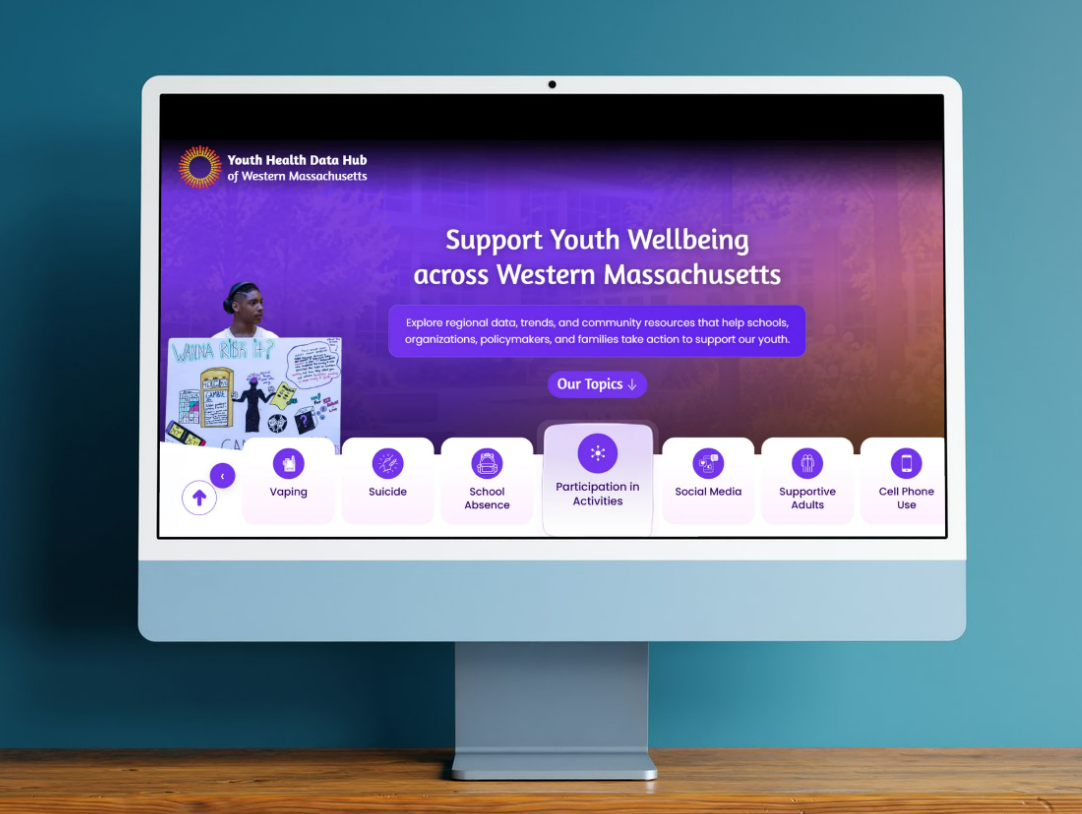
We are pleased to announce that the Youth Health Data Hub of Western Massachusetts is now live! The Hub is designed to help communities better understand youth experiences, learn from one another, and turn information into action. The Hub was shaped by prevention coalitions, schools, community organizations, public health professionals, legislators, young people, and many other partners across Western Massachusetts. We are deeply grateful to the countless individuals who shared their time, expertise, and perspectives throughout its development. The idea for the Hub emerged several years ago through our work on the Western MA Youth Mental Health Roadmap , when young people and community partners identified a need for better access to data, evidence-based strategies, and examples of work happening across the region. In response, the Public Health Institute of Western Massachusetts, with support from The Irene E. & George A. Davis Foundation, convened a regional advisory group and worked collaboratively to bring this vision to life. The Hub brings together interactive data, research, prevention and promotion strategies, and examples from across the region. We view it as a living resource and will continue to expand it over time. We hope it becomes a shared space for learning, collaboration, and collective action that helps all young people in Western Massachusetts thrive. Learn the many ways you can get involved. Explore the Hub: YouthHealthDataHub.org
October 28, 2026
SPRINGFIELD, MA — The Public Health Institute of Western Massachusetts (PHIWM) is pleased to announce a new $300,000 investment from Sanofi to expand its work improving respiratory health across Western Massachusetts. Building on years of work through the Healthy Air Network and Pioneer Valley Asthma Coalition , PHIWM has launched a new Respiratory Health Advisory Board , bringing together resident leaders, community organizations, healthcare providers, community health workers, and other stakeholders to advance solutions that promote healthier lungs and healthier communities. The Advisory Board includes Resident Advisors from communities most impacted by respiratory health inequities, ensuring that residents help shape priorities, strategies, and solutions. Respiratory health inequities are driven by a range of factors, including environmental exposures, substandard housing conditions, barriers to healthcare access, and limited awareness of strategies that can prevent emergencies and hospitalizations that increase healthcare costs and economic burdens on families and communities. “We are grateful for Sanofi’s partnership as we deepen our coalition’s work to implement successful strategies and build more linkages to healthcare providers in Springfield, Chicopee and Holyoke,” said Jessica Collins, Executive Director of PHIWM . “With the involvement of people who experience respiratory health issues and key partners, we can reduce inequities and help more people live healthier lives.” The funding will support existing and new approaches to respiratory health that combine community engagement, healthy homes interventions, education, policy advocacy, and healthcare partnerships. Over the next three years, Sanofi's investment will support efforts to: Convene and expand a regional respiratory health coalition and advisory board to guide the work. Expand and strengthen the Healthy Homes initiative by working with healthcare and Revitalize CDC to provide education and home-based interventions to improve indoor air quality, connect residents with healthcare and community resources, and strengthen referral pathways supported by Community Health Workers. Partner with statewide coalitions to advance respiratory health policies and systems changes which include : Securing potential new bond funding for the Massachusetts Healthy Homes Program --currently being considered by the MA Legislature’s conference committee for the environmental bond bill; Implementing hopeful new policies (also in that conference committee) to better track and mitigate both indoor and outdoor air quality; and Identifying sustainable financing approaches to support the work of Community Navigators and Community Health Workers.  Expand respiratory health communications and education to help residents recognize symptoms earlier, better manage respiratory conditions, and access available resources. Information will be shared through community workshops, partner networks, Resident Advisors, PHIWM’s website, and the AirWatch app, covering topics such as asthma and COPD management, indoor and outdoor air quality, tobacco and vaping cessation, lung cancer screening, and other respiratory health resources. "At Sanofi, we believe some of the most promising solutions to local health challenges come from the communities closest to them. By working with community-based stakeholders, like PHIWM and including organizations, patients, providers, and legislative leaders, we aim to support those solutions," said Tanisha M. Sullivan, Head of External Engagement and U.S. Health Equity Strategy at Sanofi . “As a company with deep Massachusetts roots, our commitment to this work goes beyond a single program to lasting relationships and sustainable policy solutions designed to help improve respiratory health in Springfield, Holyoke, Chicopee, and across the state." This funding from Sanofi comes at a critical time as communities across Western Massachusetts face growing respiratory health challenges driven by climate-related impacts and changes in healthcare access and insurance coverage that make it more difficult for some residents to access preventive care and treatment. Statements of Support “Western Massachusetts communities suffer from some of the highest rates of asthma in the nation. My office has long supported efforts to address the environmental, housing, and healthcare factors that contribute to this inequity,” said Attorney General Andrea Joy Campbell . “I’m grateful to Sanofi for their contributions to improve respiratory health in the area, including supporting increased access to medical care and education.” “Springfield’s history as an environmentally overburdened community has contributed to respiratory disease rates among the highest in the nation. Sanofi’s investment is both timely and greatly appreciated, as it strengthens our collective efforts to confront these inequities and advance meaningful health improvements across the Hampden District,” said State Senator Adam Gómez. “Their partnership demonstrates what is possible when we work together to support healthier homes, healthier air, and healthier lives.” “Massachusetts has some of the highest rates of adult and childhood asthma in the country, with Springfield, Holyoke, and Chicopee ranking near the top for the state,” said Robbie Goldstein, MD, PhD, Commissioner of the Massachusetts Department of Public Health . “This new funding will help to urgently address respiratory health in the region, and will support work the Department does in schools and communities to reduce asthma triggers. These types of partnerships – bringing communities and health care together – are exactly what we need to make our homes and schools healthier.” ABOUT THE PUBLIC HEALTH INSTITUTE OF WESTERN MASSACHUSETTS The Public Health Institute of Western Massachusetts supports communities in their efforts to become measurably healthier and more equitable through community engagement, collaborative partnerships, communications, data analysis, research and evaluation, and policy advocacy. PHIWM is committed to continuous learning, fostering collaboration, and amplifying the voices of those we serve. For more information, visit PublicHealthWM.org.