Proactive vs. Reactive Leadership
Putting Resources into Practice: A Race & Health Equity Blog
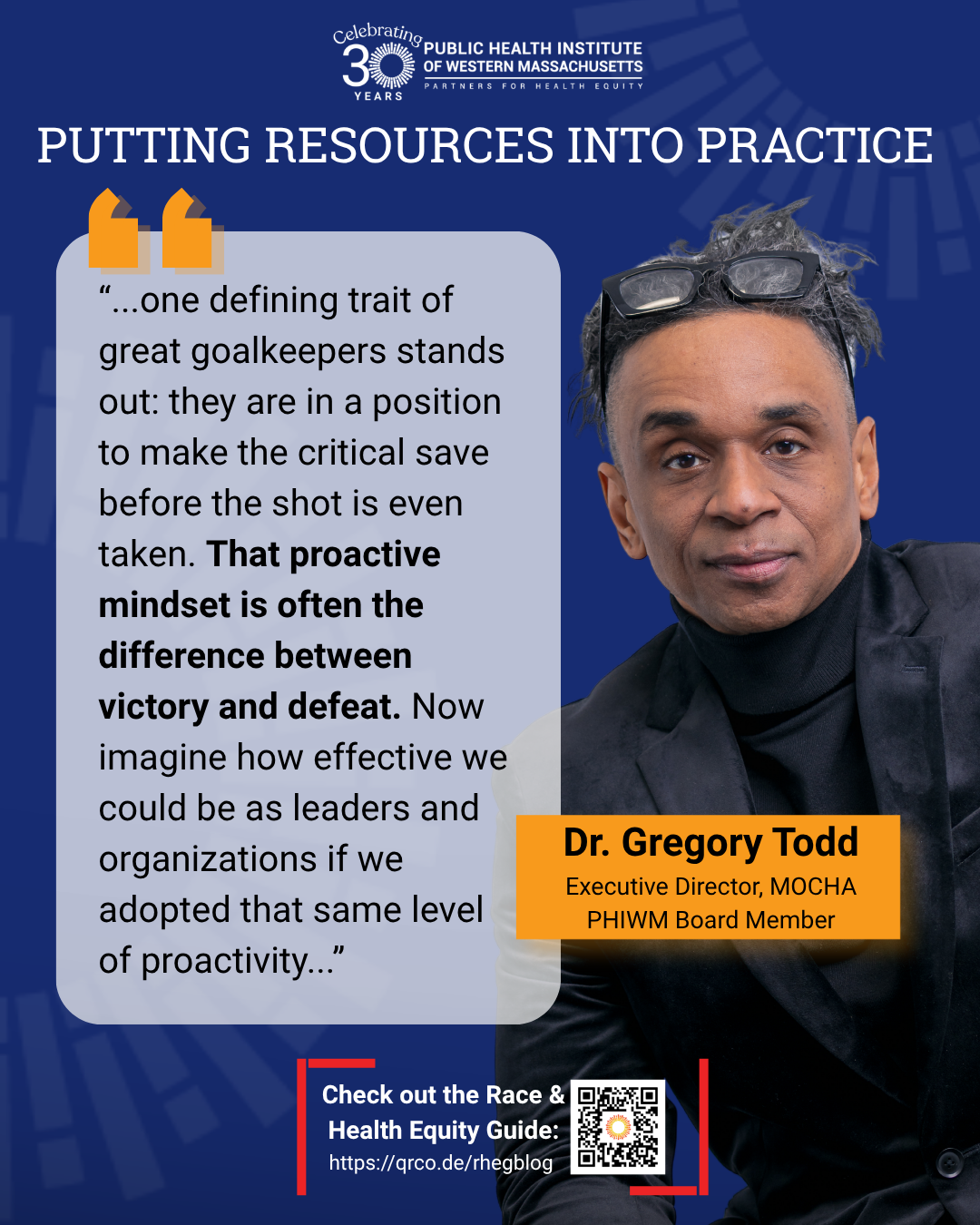
Dr. Gregory Todd is the executive director of Men of Color Health Awareness (MOCHA). He also serves on the Board of Directors for the Public Health Institute of Western Massachusetts. Below, read his submission to our blog about putting race and health equity resources into practice
Proactive vs. Reactive Leadership
If you’re a devoted soccer fan like I am, you know that one of the most demanding positions on the field is goalkeeper. Their role is simple in theory—keep the ball out of the net—but incredibly complex in practice. Over the countless matches I’ve watched, one defining trait of great goalkeepers stands out: they are in a position to make the critical save before the shot is even taken. That proactive mindset is often the difference between victory and defeat.
Now imagine how effective we could be as leaders and organizations if we adopted that same level of proactivity in our decision-making, development, and programming. Over the past months—and even years—we have reactively navigated shifting funding streams, changing political climates, evolving social agendas, and limited resources. Despite these challenges, we have continued to deliver meaningful services and pivot effectively to meet the needs of those we serve. That is no small accomplishment.
If I had a magic wand, however, and could change one thing about this current mindset, it would be this: I want to move from being highly effective reactors to becoming truly proactive service providers. One strategy could be not just envisioning the best-case scenario for serving our stakeholders, then also intentionally forecasting the potential barriers that could stand in the way of success—before they arise.
This shift represents more than new procedures; it calls for an evolution in mindset. Our strategic plans would be grounded in best-case outcomes while also equipping us with clear strategies to address obstacles. We would have the capacity to invest in our staff without fear of cultural strain or organizational instability. Leadership would become more empowering, staff more prepared, and stakeholders genuinely transformed.
So, the six-billion-dollar question remains: how do we become brave enough to fully embrace proactivity?
The Interaction Institute for Social Change offers resources and training to support leadership. Find other helpful resources in the Race and Health Equity Resource Guide.
share this
Related Articles