Press Release: Kresge Foundation awards grant to Public Health Institute of Western Massachusetts and Live Well Springfield to combat climate change, improve community health

December 5, 2025

Springfield, MA – The Kresge Foundation has awarded the Public Health Institute of Western Massachusetts, as convener of the Live Well Springfield coalition, a grant of $225,000 per year for three years to address climate change and protect people’s health in communities disproportionately affected by extreme heat, flooding, air and water pollution, and chronic and infectious disease. 


The Public Health Institute of Western Massachusetts is one of 32 organizations nationwide receiving grant funding as part of The Kresge Foundation’s Climate Change, Health and Equity initiative. Live Well Springfield partners on the grant include Arise for Social Justice, Pioneer Valley Planning Commission, Way Finders, and Springfield Climate Justice Coalition. With this funding, the Live Well Springfield Climate Change, Health, and Equity Committee (CCHE) will expand its efforts to build a healthier, more resilient Springfield. 


The Live Well Springfield CCHE Committee will: 

  • Work with the City of Springfield to build awareness and adoption of the Community Choice Power Supply Program, which uses collective buying power to secure stable, affordable electricity from cleaner, renewable sources.  Live Well Springfield successfully advocated for the City to adopt this program, with support from a previous Kresge grant. 
  • Help update the city’s Climate Action and Resilience Plan, ensuring it reflects current challenges and community needs. 
  • Explore housing development policies that protect residents from extreme heat. 
  • Continue to advance statewide advocacy against polluting biomass facilities. 
  • Host community workshops on climate resilience. 


“Kresge’s continued investment in Springfield is vital to sustaining our momentum in advancing climate justice. We feel proud and empowered to stand tall among the many major cities that were also selected for this honor,” said Samantha Hamilton, Director of Coalition Building and Community Engagement at the Public Health Institute of Western Massachusetts. 


“Collaboration is critical to address the impacts of climate change,” said Jessica Collins, Executive Director of the Public Health Institute of Western Massachusetts. “These Kresge funds will help us advance strategies originally planned with the city and other partners before the EPA unexpectedly terminated the $20 million Community Change grant. We are so grateful that private philanthropy continues to step up and support local and regional climate mitigation work.” 


“The human health impacts of climate change are profound, and while climate change affects us all, it hits some communities harder than others. The pollution that creates dangerous heat waves and severe storms causes the most harm in communities already experiencing persistent health inequities, like lack of access to safe housing and quality health care, as well as chronic illnesses and respiratory disease, said Shamar Bibbins, Kresge Environment Program managing director. “Equitable solutions must be driven by the communities most affected, and doing so in partnership with trusted health practitioners and institutions can amplify local innovations and build broader momentum for change.” 


“Long-term change in cities requires strong and sustained cross-sector partnerships. Working together, we ensure that all of us, no matter who we are or where we live, have the opportunity to be healthy and to thrive. Climate action is fundamentally a public health imperative—offering transformative opportunities to reduce mental health burdens, chronic diseases, and infectious disease spread while advancing health equity for all," said Monica Valdes Lupi, Kresge Health Program managing director. 


For more information on Kresge's Climate Change, Health & Equity initiative, click here. 


ABOUT THE PUBLIC HEALTH INSTITUTE OF WESTERN MASSACHUSETTS 

The Public Health Institute of Western Massachusetts supports communities in their efforts to become measurably healthier and more equitable through community engagement, convening collaborative partnerships, communications, data analysis, research and evaluation, and policy advocacy. We are committed to continuous learning, fostering collaboration, and amplifying the voices of those we serve. For more information, visit PublicHealthWM.org 


### 

share this

Related Articles
September 17, 2026
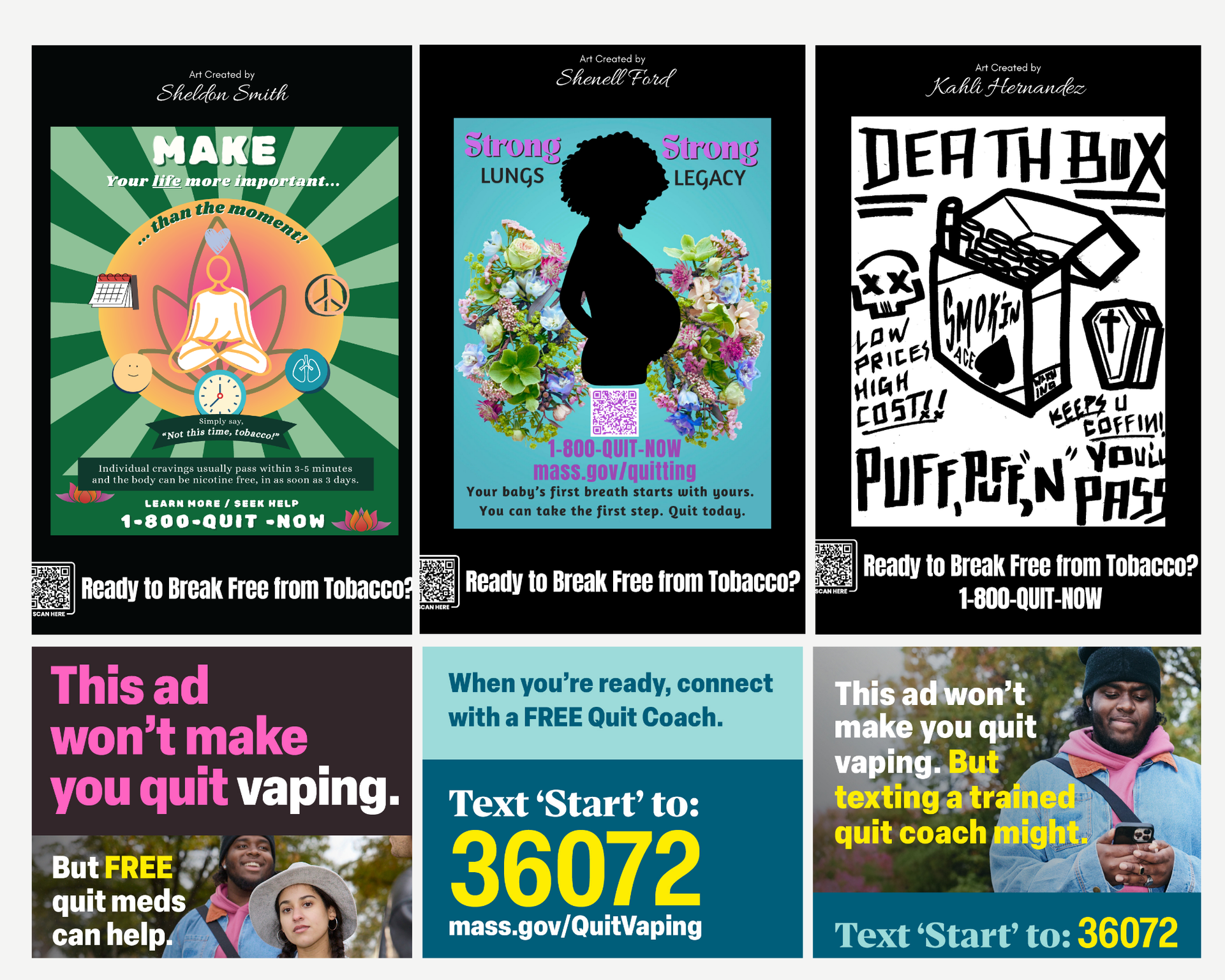
The Massachusetts Tobacco Cessation and Prevention Program offers free resources that connect individuals to quit coaching, personalized quit plans, medication support, and the Massachusetts Quitline. These services are available for both tobacco users and individuals looking to quit vaping, including young adults. To help organizations promote these resources, the state provides a social media toolkit with ready-made graphics, videos, and messaging that can be incorporated into newsletters, social media campaigns, websites, and community outreach efforts. Through the Capacity Building for Racial Equity in Tobacco project, PHIWM partnered with Springfield Cultural Partnership’s Trust Transfer Project, which commissioned local artists to create posters that promote hope, wellness, and tobacco cessation through culturally relevant artwork. These posters can be downloaded and displayed to increase awareness and connect individuals with available support. Explore the resources: Take the first step toward a nicotine-free life Quit vaping Social media toolkit Trust Transfer Project Collaboration posters
September 16, 2026
Learn about the ballot questions In addition to voting for elected officials, this fall Massachusetts voters are being asked to vote “yes” or “no” on a whopping nine ballot questions . In past years, there were just three or four, so we want you to be prepared for what will be a multi-page ballot. Key Sources of Information MA Secretary of the Commonwealth's Election Division - You should have recently received a red "Information for Voters" booklet in the mail, but if not, there are hard copies available at most public libraries and it’s also available online . In addition to the exact wording of the nine questions, this booklet contains arguments for and against each one, plus the full text of the proposed or existing laws. CommonWealth Beacon (CWB) - WB is a nonprofit, nonpartisan news source focused on Massachusetts policy, politics and civic life. It just released Election 2026: MA Ballot Questions Explained , which includes what supporters and opponents are saying about each ballot question, along with historical context and links to their earlier articles on the topic. Tufts University’s Center for State Policy Analysis - Tufts’ CSPA recently released its Voters Guide to 2026 MA Ballot Questions . It provides summaries (~400 words) and longer reports (3-5 pages) for each question. Make a Plan to Vote In the coming weeks, you will undoubtedly see multitudes of lawn signs and receive postcards, emails, and phone calls about individual questions. We hope these resources help you learn about the ballot questions and that you VOTE THIS FALL! Register to Vote by Oct 24, Update Address, Name, or Party Check Your Voter Registration Status Where do I vote? Vote in-person Early voting: Oct 17-30 (times & locations vary by city/town; details available by Oct 9 Election Day: Nov 3, 2026, 7am-8pm Vote by mail (Deadline to request to vote by mail is Oct 27, 2026). Vote Yes on #7 and #9 PHIWM is taking a position on two questions most directly associated with our work to advance health equity in Western MA. We encourage you to vote YES on #7 (Legalize starter homes) and YES on #9 (Keep our gun safety laws). Vote Yes on 7 to Legalize Starter Homes In Western MA, the cost of safe, quality housing continues to climb, and the goal of home ownership is out of reach for more and more people. For this reason, PHIWM endorses ballot question #7 to help make it possible for to build smaller, more affordable homes on smaller, more affordable lots. Passing this ballot question would allow single-family homes to be built in residentially zoned area if the lot has: at least 5,000 square feet (about the size of an NBA basketball court); at least 50 feet of land bordering the street, and access to public sewer and water services. By contrast, many municipalities currently require lots to be 2x, 4x, even 10x larger than 5,000 square feet to build one home. Legalizing starter homes in Massachusetts will result in smaller homes, more affordable homes, and more homes in general. Learn more about question #7 . Vote Yes on 9 For a Safer Massachusetts In 2024, Massachusetts passed its strongest gun safety law in a decade, cracking down on ghost guns and modernizing safety regulations. Now the gun lobby wants to overturn that law with a repeal referendum on the November 2026 ballot. While the death rate by firearms in MA is lower than most states , there is still too much violence and too many suicides due to easy access to guns. PHIWM endorses ballot question #9 so that we can keep the strong gun laws that Massachusetts voters want to save lives. Learn more about question #9 .
September 14, 2026
Jessica Collins was named a 2026 Healthcare Hero , accepting the honor on behalf of the full PHIWM team. Congratulations to the other honorees!